November 28, 2026
Choosing the Right Quad Bike Experience in the Desert
By @quadbikingdubaipress
Picking the right quad bike experience is less about chasing the biggest engine and more about matching the ride to the person, the terrain and the kind of day being planned. Desert riding can feel smooth and open one moment, then rough and technical the next. A sensible choice makes the difference between a confident ride and a tense one.
Start with the rider, not the machine
Begin by being honest about experience. A first timer does not need the most powerful bike available. They need a machine that is predictable, easy to steer and responsive at low speed. Prior riding on an ATV trail, even on firmer ground, helps with balance and throttle control, but loose sand still asks for a lighter touch.
Age, height and confidence matter too. A rider should be able to sit comfortably, reach the controls without stretching and place both feet firmly when stopping. If the bike feels too large before the engine is even started, it is the wrong size. Look for a setup where the rider can shift weight naturally, since that movement helps the bike climb and turn on a sand dune.
Group dynamics are worth considering at this stage. A mixed group should be paced around the least experienced rider, not the keenest one. Otherwise the day becomes a series of waits and rushed sections, with little enjoyment for anyone.
Decide what kind of ride suits the day
Quad riding can mean a short introductory session, a longer desert route, or part of a wider desert safari. Each option asks for a different approach. A short session is useful for learning control and getting a feel for the terrain. A longer ride needs more attention to comfort, water, sun cover and pace. A route linked to a desert camp may include stops, so the bike must be easy to park and restart on uneven ground.

Think about the terrain before choosing the route. Open sand gives a wide, flowing ride, but it can be tiring because the bike sinks and the rider has to steer with the body. Firmer tracks are easier for beginners, yet they can become rough where many vehicles have passed. Rolling dunes are rewarding for riders who already understand momentum and line choice.
For anyone comparing quad biking dubai options, the route should be judged by pace, terrain and supervision rather than by the look of the bike alone. A good ride is not simply the one with the highest speed. It is the one that lets the rider stay relaxed and in control from start to finish.
Choose the right bike class
Quad bikes differ in engine size, weight, suspension and braking. A smaller engine is usually easier to manage for new riders, especially on loose sand where sudden power can spin the wheels and dig the bike in. More power can be useful on long climbs or for heavier riders, but it also demands finer throttle control.
Suspension matters as much as the quad bike engine. Soft, well controlled suspension absorbs bumps and keeps the tires in contact with the ground. Worn suspension can make the bike bounce, which reduces steering precision and increases fatigue. Brakes should feel steady and predictable, with no pulling to one side.
Automatic transmission is often simpler for newcomers, as it removes the need to coordinate gears and clutch. More experienced riders may prefer manual control for technical sections. Neither choice is automatically better. The right choice depends on whether the rider can focus on terrain rather than machinery.
A dune buggy is sometimes considered as an alternative. It offers a different seating position and can feel stable for some riders, though it handles differently on sand. Anyone used to a dune buggy should not assume the same skills transfer perfectly to a quad, because body position and balance are not identical.
Check safety before committing
Safety should be visible from the first conversation. A proper safety briefing should explain hand signals, stopping distance, how to follow the route and what to do if the rider becomes unsure. It should also cover what happens if the group separates. Clear rules make the ride calmer for everyone.
Protective gear deserves close attention. A helmet should fit snugly, sit level and stay in place when the head moves. Gloves help with grip and reduce friction on the hands. Eye protection matters in sandy conditions, and long trousers plus covered footwear protect against brush, heat and accidental contact with the bike.
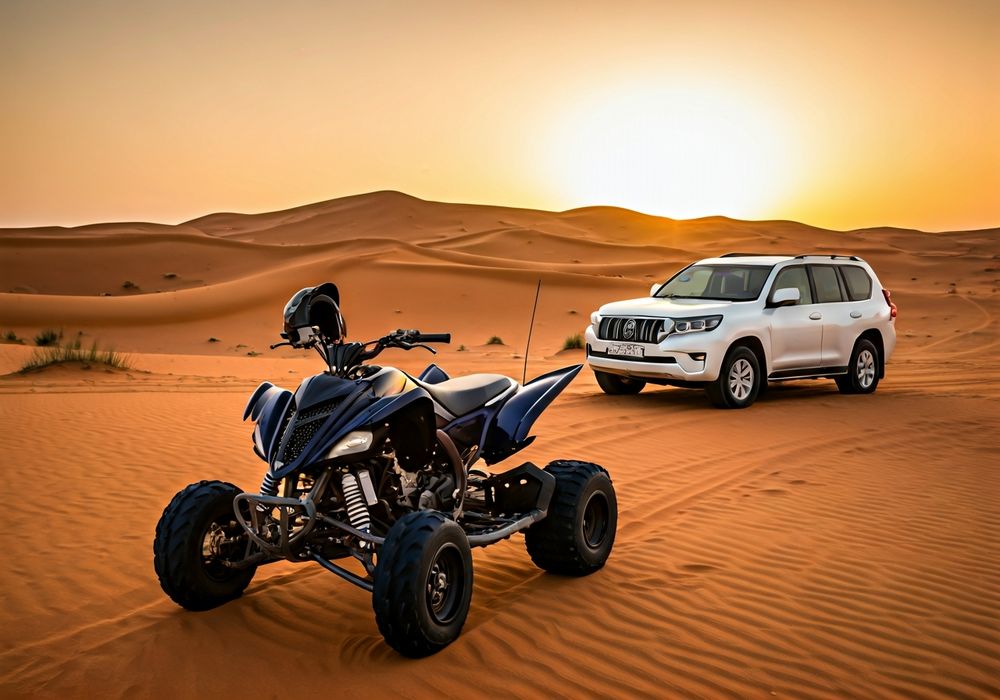
Watch how the bike is presented before the ride. Check that the tires look properly inflated for sand, the handlebars are straight, the controls move cleanly and there are no obvious leaks or loose parts. If something looks wrong, it should be reported before departure. Mechanical diagnosis and repairs are a job for a qualified professional, not something to improvise at the start of a ride.
Match pace and route to ability
A well chosen route has room to build confidence. It starts with easier ground, then adds gentle turns and short climbs once the rider is comfortable. Steep dunes, hard turns at speed and sudden drops should be left to riders with the right skill and judgment. Sand changes through the day, so a route that looks simple in the morning may feel different after traffic has broken the surface.
Pace is a practical safety choice. Riding too close to another bike reduces reaction time, especially when sand sprays up and limits vision. Riders should leave enough space to stop without swerving. Following exactly in another track can also be deceptive, because ruts may catch the front wheels.
The best operators and organizers set clear expectations before moving off. They explain hand signals, set a steady speed and give beginners time to settle. If a rider is struggling, the smart response is to slow the group or shorten the route, not to push through.
Look at the whole experience
Comfort shapes the day as much as performance. Sun exposure, heat and dehydration can affect concentration. Bring water where allowed, wear breathable layers and use sun protection that stays secure while riding. A rider who is overheated reacts more slowly and is more likely to make rough inputs.
Timing also matters. Cooler parts of the day are usually more comfortable, while midday heat can make sand riding harder. A route with photo stops or a desert camp break can be enjoyable, but each stop should have safe parking space and enough room for riders to move away from traffic.
When people search for quad biking dubai experiences, they often focus on the ride itself. The better question is whether the whole outing supports safe, steady riding. That includes the briefing, the route, the pace, the gear and the way questions are handled before the engine starts.
Make the final choice with a simple test
Before settling on an option, run through a few practical checks in order. They help turn a vague interest in riding into a clear decision.
- Confirm the rider can sit comfortably, reach every control and manage the bike at walking pace.
- Ask what terrain the route includes and whether it suits the least experienced rider.
- Check that protective gear fits, especially the helmet and eye protection.
- Listen for a clear safety briefing with signals, spacing rules and a plan for stopping.
- Choose a pace that leaves room to learn, not one that depends on constant catching up.
A good choice should feel calm before the ride begins. If the route, bike and rules all make sense, the rider can focus on the sand, the turns and the rhythm of the machine. That is the point where the experience becomes enjoyable rather than merely adventurous.
Ultimately, the right quad bike is the one that fits the rider and the terrain. Power is useful only when it can be controlled. A scenic route is worthwhile only when it is paced well. Take time to compare those details, and the final decision becomes much easier.
❧